MATH 10 ARTICLE
MATH NEWS

The requirements to graduate are: math 10 course & math 11, or 12 course. If you have enough credits you don’t have to take math 12, but it is highly recommend because many fields require math 12 for university or college.
Palmer provides:
-
grade 8 to 9 math courses
-
incentive math 8, incentive math 8/9
-
workplace math 9
-
workplace math 10
-
Foundations oof mathematics and pre calculus 10
-
pre calc 11
-
foundations math 11
-
pre-ap enriched math pre calc 11
-
workplace math 12
-
foundations math 12, pre calc math 12
-
ap calc math 12
Math 10 foundations and pre calculus are required before taking math 11. You're able to choose between 2 kinds of math for math 11; foundations math 11 or pre-calculus math 11.
Foundations is used for students that want to pursue careers involving social sciences, humanities, or art. Some examples are geography, history, english and music.
Pre-calculus is used for students that want to go into STEM (Science, technology, engineering, math) and math-based programs. Between the two, foundation is considered easier because it's less complex then pre-calculus because it covers less abstract material, less complex questions, and is also designed for students who are not pursuing math & science-based fields.

Exponent law
WHAT YOU LEARN
In Foundations of Mathematics and Pre-calculus 10 you learn about:
-
Operations on power with integral exponents
-
Rules that simplify repeated multiplication (exponents)
-
-
Prime factorization
-
Finding the LCD (lowest common denominator), GCD (greatest common denominator), and breaking numbers down to find the lowest prime number
-
-
Functions and relations: connecting data, graphs, and situations
-
You learn how to find functions of the graph
-
-
Linear functions: slope and equation of lines
-
Finding the slope with the formula y = mx + b. The slope is how steep and its distance.
-
-
Arithmetic sequences
-
Finding the list of constant consecutive numbers (finding the pattern of numbers)
-
-
Systems of linear equations
-
Finding the solution or no solution other than infinite solutions on a graph.
-
-
Multiplication of polynomial expressions
-
Using F.O.I.L to multiply factored polynomials. ex: (x+1)(x+4) = x^2 + 5x + 4
-
-
Polynomial factoring
-
Determining what multiplied to get the polynomial. ex: x^2 + 6x + 8, the factored version would be (x+2)(x+4)
-
-
primary trigonometry ratios
-
Finding the angle and sides of a triangle using TAN, COS, SIN
-
-
Financial literacy: gross and net pay
-
Calculating the tax income that goes in and out of salaries
-
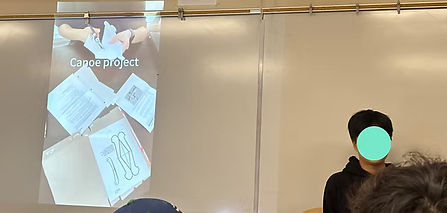

There is also workplace 10, which is different than Foundations mathematics and pre calculus 10. In order to take workplace 10 you must need a recommendation from a math 9 teacher.
-
create, interpret, and critique graphs
-
primary trigonometry ratios
-
metric and imperial measurement and conversions
-
surface area and volume
-
experimental probability
-
financial literacy: gross and net pay
In work place math 10 you learn about:
